Current, correct standardization contributes significantly to the further development and improvement of the quality of measures in the field of water management. Through uniform, binding specifications, ambiguities in implementation are avoided and a comparable, verifiable standard is created. Standardization is therefore also an important prerequisite for planning reliability, quality control, and professional exchange.
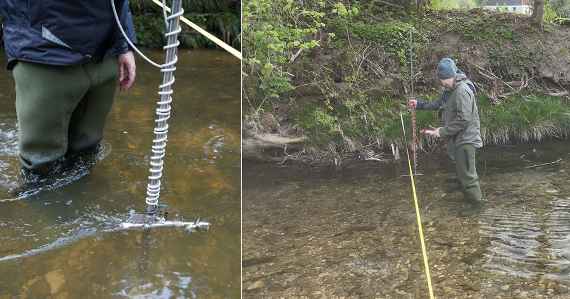
Conducting discharge measurement in a stream using the procedure described in ÖNORM EN ISO 748.
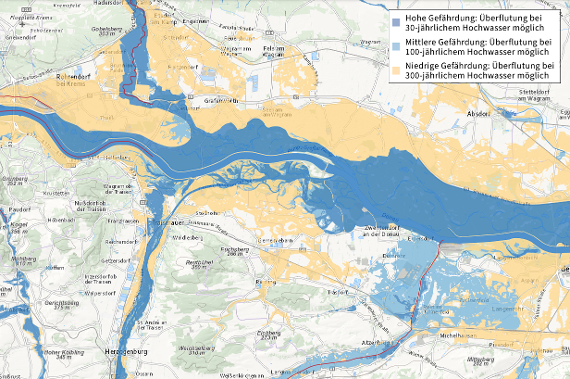
The Technical Guideline for Hazard Zone Planning in Hydraulic Engineering ensures that hazard zones along rivers are determined according to uniform specifications throughout Austria.
Examples of Working Groups and Committees:
- Austrian Standards Committee 039 – Hydrology
The committee creates standardization in the field of water cycle monitoring. It standardizes methods for measuring precipitation, groundwater, and determining discharge in rivers. The completed standards describe, for example, how rainfall intensity is measured or how stationary discharge measurement with ultrasonic sensors works. Members include experts from government authorities, science, and the private sector.
- DIN NA 119-09-10 AA Hydrometry
Performs the same function as the Austrian Committee 039 in Germany. The DACH (Germany-Austria-Switzerland) networking on current hydrometry topics takes place through this DIN committee.
- WMO – Expert Team Hydrometry
The WMO provides standards free of charge for download on its website. Guidelines are developed by an international team and are available in several languages. Examples of well-known guides include the "Manual of Stream Gauging" and the "International Glossary of Hydrology."
- DWA
The DWA is a German association responsible for developing technical standards in the field of water and waste management. In hydraulic engineering, DWA working groups develop procedures for, e.g., hydraulic calculation of watercourses with vegetation, construction of fish passage facilities, or near-natural bed stabilization in rivers.
- BMLUK Guidelines
The Austrian Federal Ministry for Agriculture, Forestry, Climate and Environmental Protection, Regions and Water Management produces free technical guidelines in the fields of hydraulic engineering and hydrometry, available for download on its website. Examples include the "Gauging Station Regulations," the "Technical Guideline for Hazard Zone Planning," and the "Guideline for River Development and Risk Management Concept (GE-RM)."